
.png)




As Gut-Brian-Skin Axis has been more exposed these days, it earns more attention from both general consumers, patients, as well as researchers.
近年來,「腸–腦–皮膚軸(Gut–Brain–Skin Axis)」的概念受到越來越多關注,不僅一般消費者和患者關注,也成為研究焦點。
Australian researchers from Visceral Pain Research Group at the South Australian Health and Medical Research Institute discovered the mechanism that causes itchy skin may also be responsible for the pain experienced in people with Irritable Bowel Syndrome or known as IBS.
澳洲南澳健康與醫學研究所(South Australian Health and Medical Research Institute)內臟疼痛研究小組的研究者發現,引起皮膚痕癢的機制,可能也導致腸易激綜合症(Irritable Bowel Syndrome,簡稱 IBS)患者的腹痛。
Irritable Bowel Syndrome (IBS) affects around 10–15% of the population worldwide. In the U.S. alone, that’s up to 45 million people, and two-thirds are women. IBS is marked by recurring abdominal pain and changes in bowel habits, which can show up as diarrhea (IBS-D), constipation (IBS-C), or both.
腸易激綜合症(IBS)影響全球約 10–15% 的人口。在美國,估計有 2,500–4,500 萬患者,其中三分之二為女性。IBS 的特徵是反覆腹痛及排便習慣改變,可能表現為腹瀉型(IBS-D)、便秘型(IBS-C)或交替型。
Causes remain complex. Many patients live with a hypersensitive gut, where normal signals are misread as pain. Stress, anxiety, and depression can amplify these sensations, creating a cycle between the gut and brain.
原因可以很複雜。許多患者腸道對刺激物或感觀特別敏感,將正常信號誤解為疼痛。壓力、焦慮與憂鬱可加劇症狀,形成腸與腦之間的惡性循環。
According to Jesse Stondell, MD, an assistant professor in the department of gastroenterology at the University of California, Davis, told Health News on Healthline -
“There’s also clearly a component of hypersensitivity, which means that for some people, their bowel is much more sensitive to normal stimuli, and the body misinterprets this as pain. Finally, anxiety and depression can significantly worsen IBS but may or may not be a true cause.”
加州大學戴維斯分校(UC Davis)腸胃科助理教授 Jesse Stondell 博士向 Healthline 表示:「腸道過敏是一個明顯部份,有類人的腸道對正常刺激物過度敏感,身體將其誤認為疼痛。最後,焦慮與憂鬱可顯著惡化 IBS,但不一定是根本原因。」
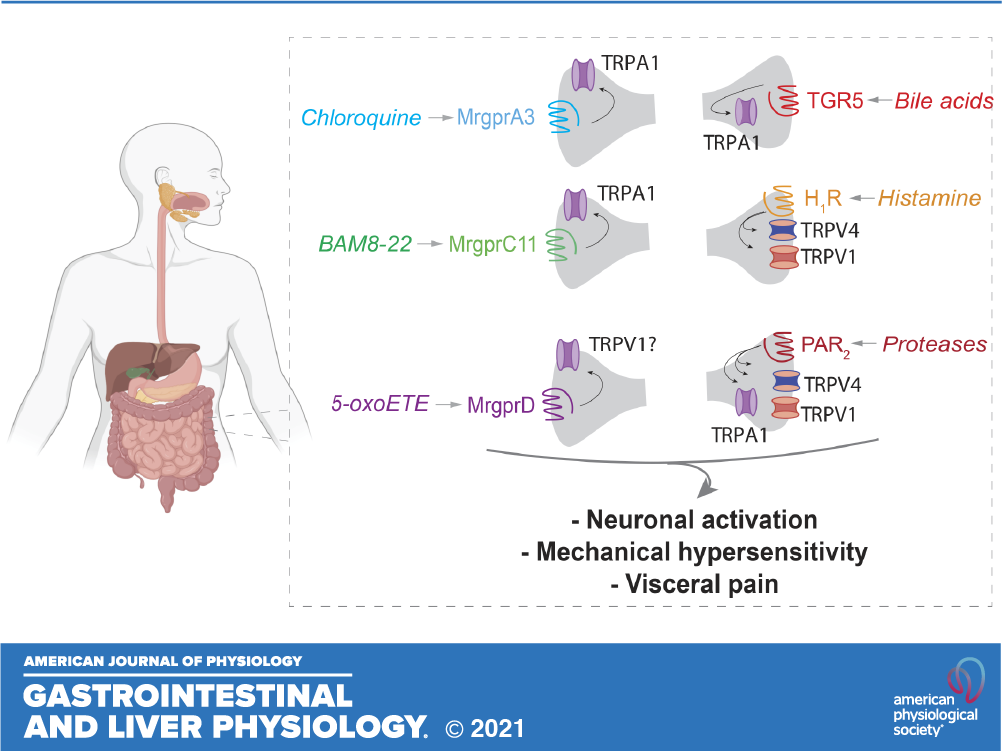
Professor Stuart Brierley, as Lead Researcher, along with Matthew Flinders, research fellow in Gastrointestinal Neuroscience, have uncovered that the same receptors that make skin itchy also exist in the gut. Among them:
Stuart Brierley 教授與腸胃腦神經科學研究員 Matthew Flinders 發現,引起皮膚癢的受體同樣存在於腸道中,主要包括:
When these receptors are overactive, they create visceral hypersensitivity — the hallmark of IBS pain. Human tissue studies confirm IBS patients often have higher levels of these receptors, which may explain their chronic abdominal “itch.”
當這些受體過度活化時,會引發內臟高敏,這正是 IBS 疼痛的標誌。人類組織研究顯示,IBS 患者往往有更多此類受體,可能解釋其慢性腹部「痕癢感」。
Scientists are now testing ways to block these signals. The hope is to create new IBS treatments that work on gut-nerve pathways, avoiding opioids and their risks.
目前,科學家正研究阻斷這些信號的方法,期望開發以腸道神經為作用靶點的新型 IBS 藥物,避免使用類鴉片藥物及其風險。
The current research highlights the connection between gut, skin, and brain. Microbiome imbalances and immune signals can link digestive health to skin inflammation, while stress and mood disorders amplify gut symptoms. This mirrors ancient views of interconnected organ systems.
研究突顯了腸道、皮膚與大腦的連結。腸道菌群失衡與免疫信號可將消化健康影響至皮膚發炎,而壓力與情緒障礙則加劇腸道症狀。這與古代中醫強調臟腑互聯的觀念不謀而合。
In TCM, IBS often presents as patterns such as:
TCM sees the Lung and Large Intestine as interior–exterior pairs. If Damp-Heat and Qi stagnation disturb the intestines, the Lung’s role in governing the skin is also affected — resonating with the modern “gut–skin–brain axis.”
中醫認為,肺與大腸表裡相表。若濕熱與氣滯干擾腸道,肺在主皮膚方面的功能亦受影響,與現代的「腸–皮–腦軸」相呼應。
While new receptor-targeting drugs are in development, practical steps already help:
“Itchy gut” reframes IBS not as a vague digestive complaint but as a nerve-driven hypersensitivity where itch receptors in the gut play a central role. Current science and Traditional Chinese Medicine both point to the same truth: the gut is not an isolated organ, but part of a living axis that links body, mind, and skin.
「腸道痕癢」將 IBS 重新定義為受神經驅動的高敏感症,腸道的癢感受體扮演核心角色。現代科學與中醫均指出,腸道並非孤立器官,而是連結身體、心理與皮膚的生命軸。
Cover Photo : Unsplash / Inge Poelman
Disclaimer: This publishing is made for informational and educational purposes only. It is not intended to be medical and life advice, nor an exhaustive list of specific treatment protocols. The approach and perspective is only based upon the content contributor’s knowledge, research, or clinical experience. The content creators, authors, editors, reviewers, contributors, and publishers cannot be held responsible for the accuracy or continued accuracy of the information or for any consequences in the form of liability, loss, injury, or damage incurred as a result of the use and application of any of the information, either directly or indirectly. Each plan must be individually tailored with the guidance and clinical judgment of your medical or healthcare practitioner or related advisor.
免責聲明:內容僅供資訊及教育用途,並非醫療或專業建議,亦非特定治療方案。本文所提供的方法與觀點,僅基於內容撰稿者的知識、研究或臨床經驗。內容創作者、作者、編輯、審閱者、貢獻者及出版方,對於資訊的準確性或持續準確性,或因使用及應用該等資訊而直接或間接導致的任何責任、損失、傷害或損害,概不承擔任何後果責任。每一項療法或計劃必須在您的醫療或健康護理、或相關專業人員的指導及臨床判斷下,作個別化的調整而定。