.png)




This first part of the “Re-Search” series invites readers to look beyond experiments and theories, revisiting the origins of scientific curiosity as both an intellectual and spiritual process. It reflects on how science, when reconnected with its intrinsic intent, can once again become a dialogue between the seen and unseen, the measurable and the mysterious. Through this lens, we begin not merely to research, but to re-search — to search again, inwardly and consciously, for the essence that first made science a vessel of wonder.
「重新探索」系列的第一篇,邀請讀者超越實驗與理論的層面,重新審視科學好奇心的起源,這既是一種理性的追索,也是精神層面的歷程。文章思考當科學重新連結其內在初衷時,如何能再次成為可見與不可見、可測與奧秘之間的對話。透過這樣的角度,我們不只研究,而是「重新探索」,有意識地回望內在,尋回那份讓科學成為驚奇的本質。
Part One
第一部分
Part Two (Next Article)
第二部分(下一篇)
Part Three (Next Next Article)
第三部分(下兩篇)

[PART ONE ]

In a time when diverse medical and therapeutic support systems are available, we are keen on choosing care that is a combination of indigenous/traditional practice and pharmaceutical medicine. It seems more attainable in some countries but challenging to cultivate in parts of the world. It most likely is caused by how reductive we’ve been trained to see most things since the day we’re popped out from the womb:
在相對容易取得多元醫療與治療支援系統的時代,我們熱衷於選擇結合原著/傳統療法與製藥醫療的照護方案。在某些國家看似較容易實現,但在世界的部分地區卻難以推動。這很可能源自自出生那刻起,我們被教導以非常簡化的二分法來看待大多數事物:
Good Baby vs Naughty Baby
Normalcy vs Authenticity
Left vs Right
Neurotypicals vs Neurodivergents
Problem vs Solution
Natural vs Synthetic
Eastern Medicine vs Western Medicine
Science vs Pseudoscience
Fact vs False
All vs Nothing
乖寶寶 vs 調皮寶寶
常態 vs 真實性
左 vs 右
神經典型者 vs 神經多樣者
問題 vs 解決
自然 vs 合成
東方醫學 vs 西方醫學
科學 vs 偽科學
事實 vs 虛
全有或全無
The unique biological makeup affects each of our wellbeing. Here’s when scientific research comes in to help us understand the targeted underlying mechanisms and might lead us to choose one solution over another.
每個人獨特的生成構造影響各自的健康狀態。科學研究正好能幫助我們理解目標性底層的機制,並可能引導我們在不同問題解決方案中作選擇。
“In the modern medicine model, this means the goal of scientific research is to uncover the objective fact of health and to understand how the mechanistic parts that make up our bodies work and react and interact with various internal and external influences, be it disease states, exercise, or the medications and herbal preparations we use. Once science understands how individual components of health work, it expects them to work this way consistently, and to work for each person in the same way.” - Herbal Academy
「在現代醫療模式中,科學研究的目標是發現對健康的客觀事實,並理解構成身體的機制運作、如何對內外各種影響(無論是疾病狀態、運動、或我們使用的藥物與草本製劑)作出反應與互動。一旦科學理解了健康的個別組成部分運作,它就期望這些部分能以一致的方式運作,並對每個人同樣有效。」—— Herbal Academy
Oftentimes, this diminutive view can be convenient to group certain individuals or symptoms into one category in order to get standardized treatments. However, this is the complete opposite of how other medical or therapeutic systems view the person and understand how individual medicine works in the body, as their view is much more individualistic and inseparable from the unique human-environment-food-drug-herb interaction of each individual, also known as Biopsychosocialspirital Model and Pharmacognosy.
這種微縮化(將複雜現象簡化為單一指標)的觀點,常常方便地把某些個體或症狀歸入同一類別,從而提供標準化治療。然而,這完全不同於其他醫療或治療體系看待人的方式、與對個人化用藥在身體內如何作用的理解;那些體系的觀點更為個人化,並與每個人獨特的「人—環境—食物—藥物—草本互動」密不可分,亦即所謂的「生物—心理—社會—靈性模型(Biopsychosocial–spiritual Model)」與藥物動植物學(Pharmacognosy)。
These differing paradigms of wellbeing highlight the struggle of communication and finding a common ground between present-day science and indegnious/traditional intelligence or the medical and neurodivergent communities.
這些截然不同的健康範式凸顯了當代科學與原住/傳統智慧、以及主流醫療與多元社群之間溝通與尋找共同立場上的困難。
Even though the post-Victorian medical or known as biomedical field (which indicates conventional medicines massively evolved since industrialisation in this article) is an evolution from western herbalism and botanical therapies, the practice models and scientific studies have completely evolved from the original principles, whereas, the current Indiegnous and traditional medicines knowledge have been exclusively passing down through generational lineages from empirical practices for thousands of years.
儘管維多利亞時期過後的醫學(本文稱為「生物醫學」領域,指的是自工業化以來主流醫療的大規模演進)是從西方草本學與植物療法發展而來,但其實務模式與科學研究已經與原始原則完全不同;相對地,當前的原住民與傳統醫藥知識則透過經驗性做法由世代相傳,延續數千年。
It is recent in history that we have begun to scientifically evaluate various traditional medicinal constituents, as well as our diverse neurotypes, and how all these work with our biological makeup to match the static data, the growth of population, systemic, and economical changes in the urban world.
直到近代,我們才開始用科學方法去評估各種傳統藥材成分,以及不同神經類型(neurotypes),並研究這些如何與生物體質互動,以對應靜態數據、人口成長、制度性與經濟變化等現代城市環境因素。
Due to societal and biological evolution, conflicting cultural and individual perspectives, as well as economical and political influences, the lens on helping the neurodivergent journey has produced (ironically) divergent outcomes and sets of data.
由於社會與生物的演化、文化與個人觀點的衝突,以及經濟與政治因素的影響,針對神經多元人士的照護角度反而(具有諷刺意味地)產生出不同的結果與資料集。
Prior to delving into finding the definition of science or how to evaluate research, let’s prime our minds with this fundamental understanding that all things, including medicines, start from curiosity and develop based on philosophies. Here’s how two difference lenses see brain and mind:
在深入探討科學的定義或如何評估研究之前,先把這個基本理解放在心上:萬物(包括藥物)皆始於好奇,並在哲學之下發展。以下說明兩種不同角度如何看待腦與心:
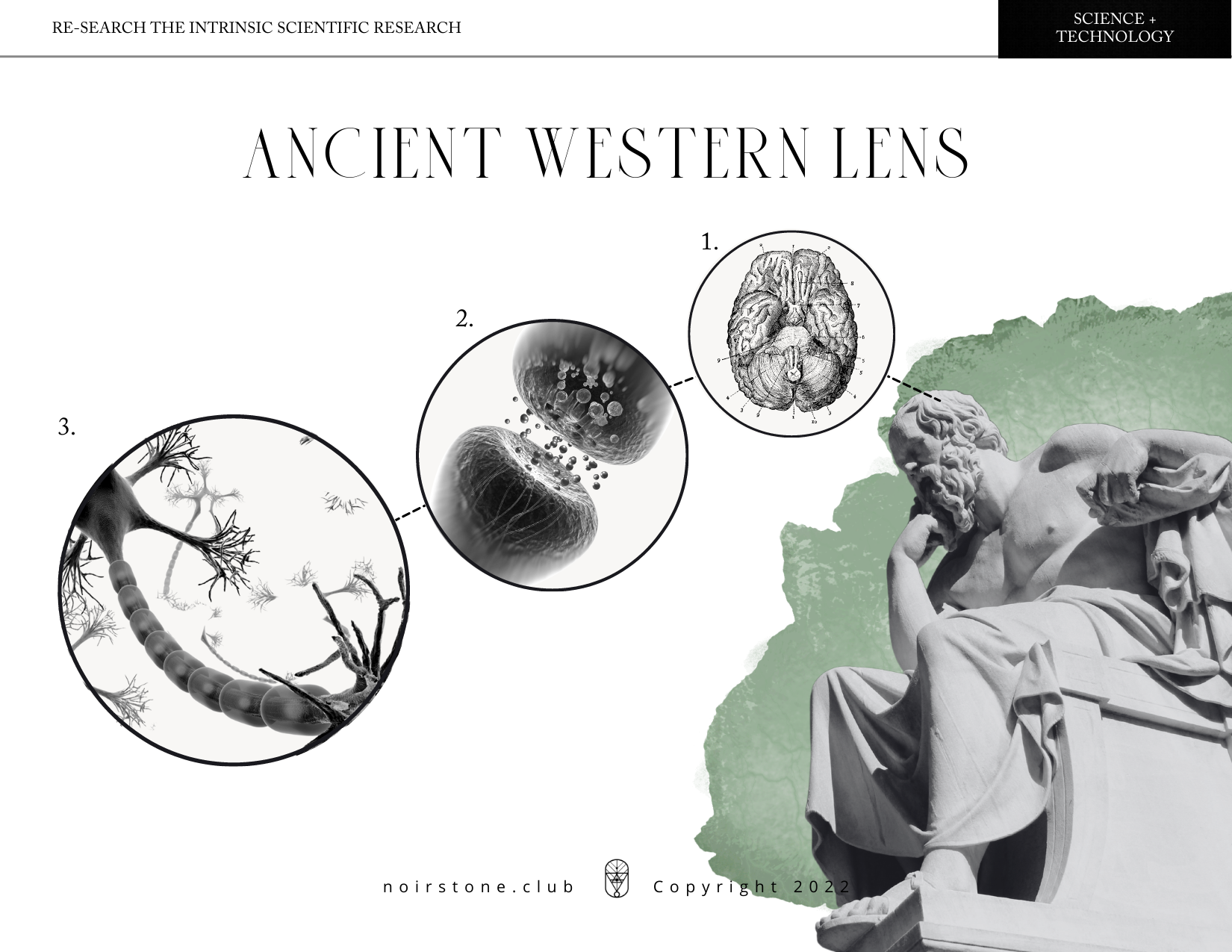
“A fundamental difference between Eastern and Western thought can be found at the foundation of civilization. When the ancient Greeks gazed at the empty-seem-ing sky, they saw something emerge. From that something, they found material matter and physical substance : real things. Much of Western scientific inquiry on the idea there is something material in the world, something real and tangible that we can discover and explore. And if our science is rigorous and careful enough, with all personal bias removed, we will ultimately be able to know and understand the material brain. Then the mind will be revealed through the brain.
「東西方思想的一個根本差異,根源於文明的基礎。當古希臘人仰望看似空無的天空時,他們看見了某種『有』的存在。由那個『有』,他們發現了物質與實體:真正的事物。許多西方科學探究建立在世界中存在某種物質、某種可被發現與探索的真實、可觸之物理念上。若我們的科學足夠嚴謹與謹慎,排除所有個人偏見,最終我們將能了解物質的大腦。然後心智會透過大腦被顯現出來。」
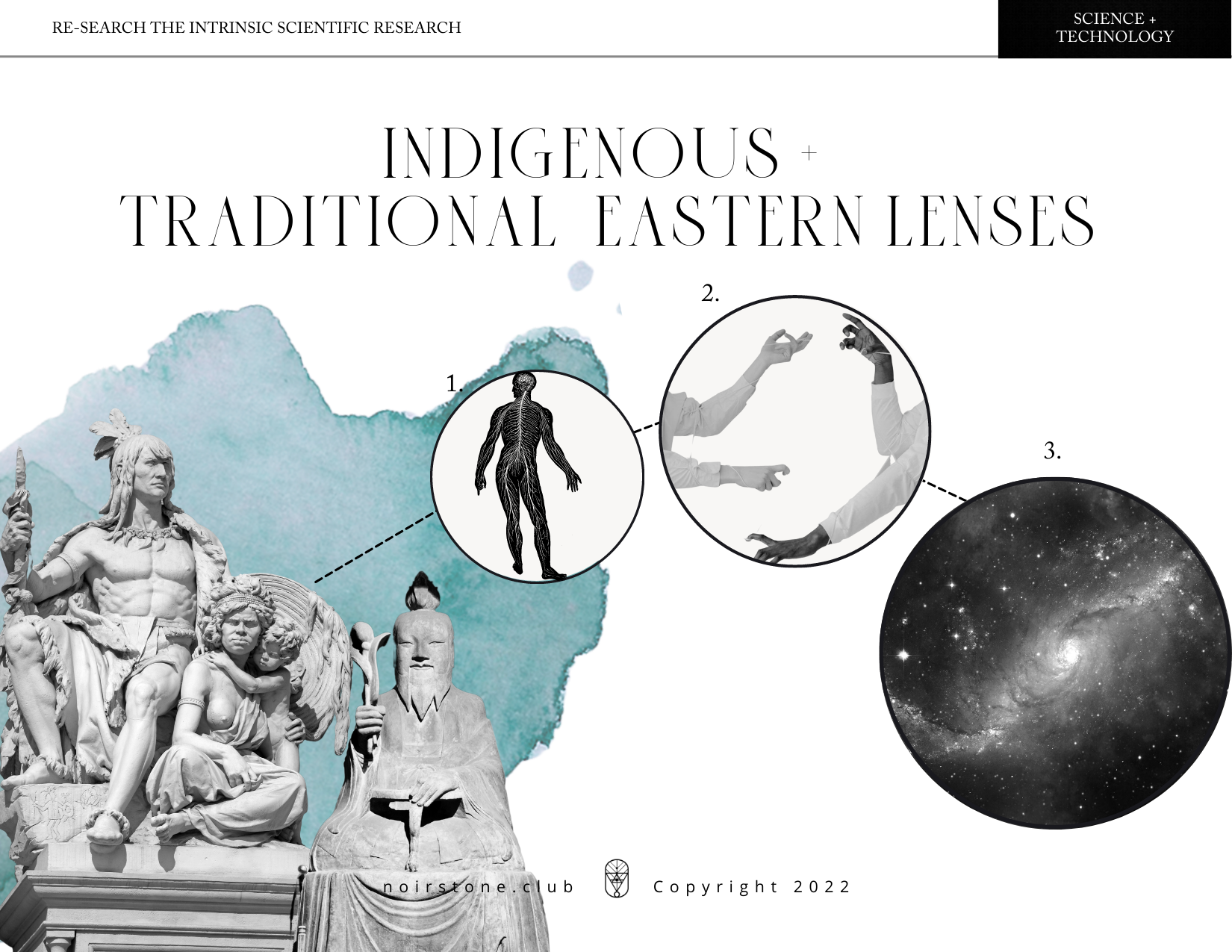
Eastern philosophy has another alternative to the view that material reality comes first. From the early beginnings, the ancient Eastern thinkers looked up into the sky and saw emptiness, the unformed Dao (means Way). Many Eastern philosophies are built on the idea that there is no matter, no lasting material to be found, only Dao (Way). Everything we experience is empty of real material substance. Things are always changing in varying ways. The best method to understand ourselves and our world is to let go of obstructions and become empty ourselves. If we are rigorous in our meditation, balanced, calm, and absolutely empty of all thought, we will perceive directly. Then the brain will be revealed through the mind.” - The Dao Of Neuroscience, p.11
「東方哲學則提供了另一種非先有物質實在的觀點。早期東方思想家仰望天空,見到的是虛空,未形成的道(意指「道」)。許多東方哲學建立在沒有持久物質的想法上,只有道。所有經驗皆無實質的物質性可言,萬物常以各種方式在變化。理解自我與世界的最佳方法,是去除障礙,讓自己成為虛空。如果我們在禪修上修為精勤、保持平衡與冷靜,完全放下雜念,我們將直接覺知。然後大腦會透過心而顯現。」——《The Dao Of Neuroscience》,第 11 頁
Let’s explore the idea by using the spider web analogy here: Curiosity and philosophies exist prior to most things, then form into two major views.
我們以蜘蛛網的類比來探討這個想法:好奇與哲學先於大多數事物存在,接著分化為兩大觀點。
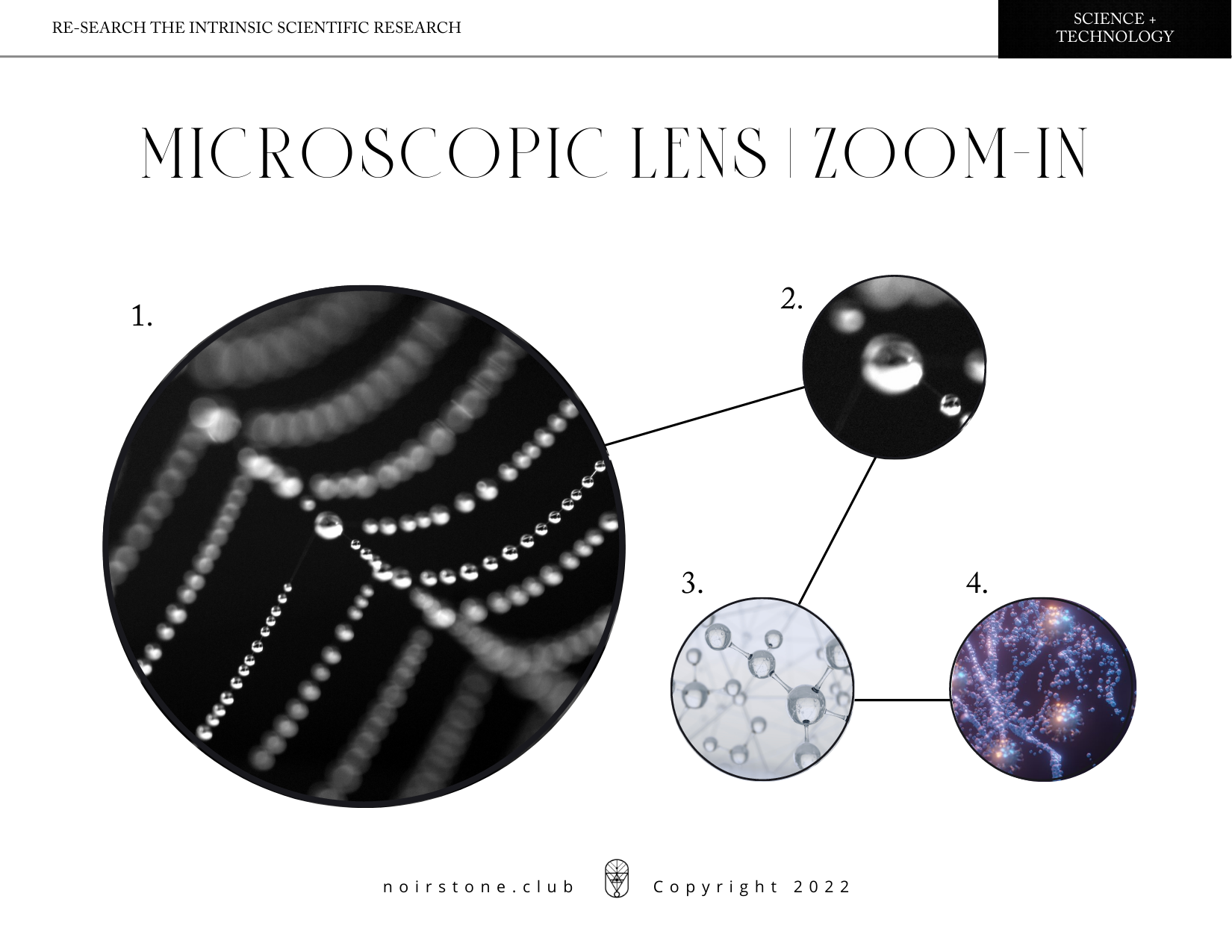
Group One sees a spider web. As they start looking into the web structure, slowly zooming into a single thread and then into the components of the thread until they find a single, profound, tangible, and an agreed upon measurable aspect in order to consider being part of discovery. Through this process, they learn the detail, structure, function, and how this spider web works within the complex system that constitutes it. They acknowledge the patterns, interdependency, and cascading effects, however, these might not be in the consideration in general practice consistently.
第一組看到蜘蛛網,當他們開始觀察網的結構,逐步放大到單一絲線,再到絲線的成分,直到找到一個單一、具體且被認可為可度量的面向,才視為可納入發現的一部分。透過這過程,他們學會細節、結構、功能,以及這張蜘蛛網在組成它的複雜系統中如何運作。他們承認模式、相依性與連鎖效應,但在一般實務中這些可能不會被始終如一地考慮進去。
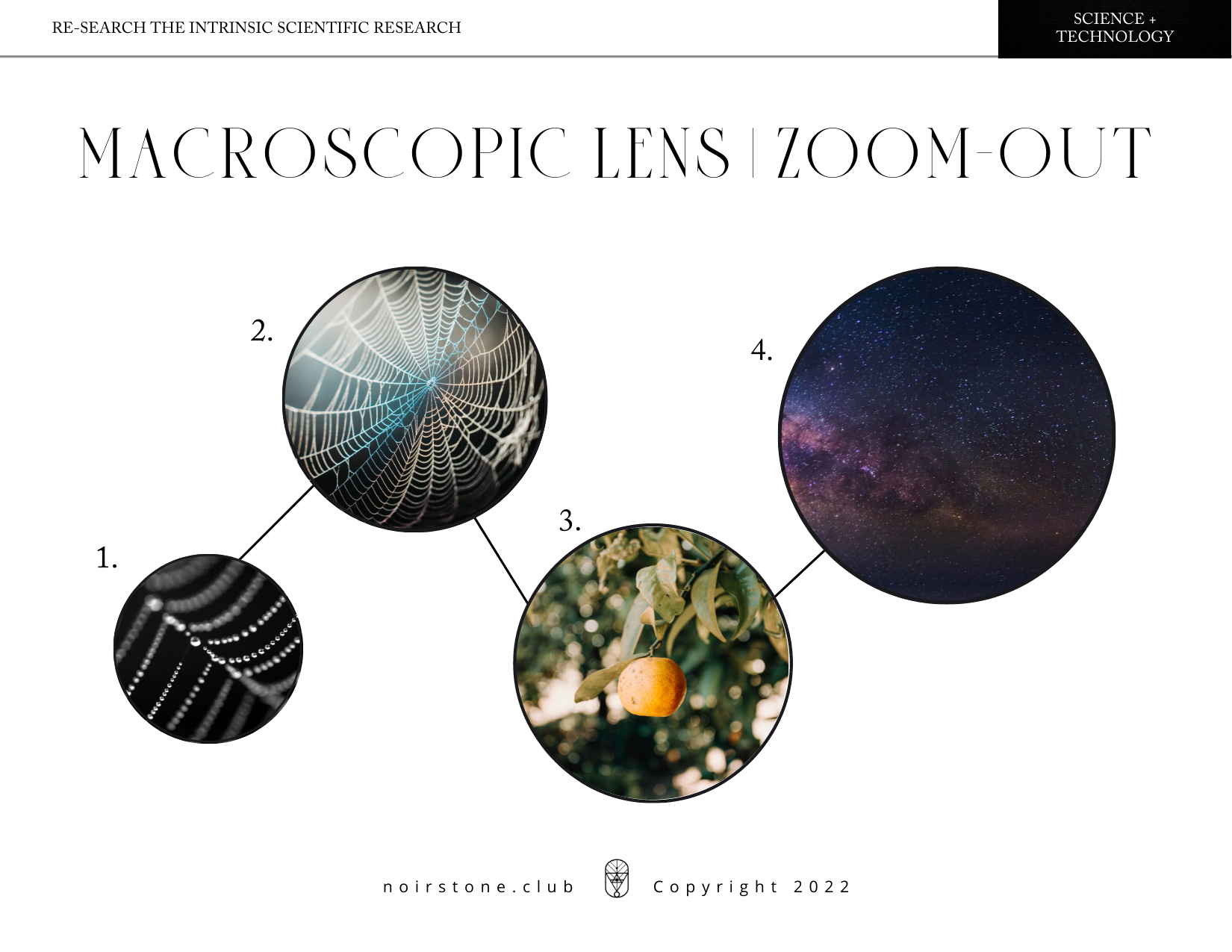
While Group B acknowledges the existence and functions of spider webs, they learn the structure of the web. This group then zooms out to focus on the “how” and “why” a spider makes webs, observing what holds the web and its overall function. They also include the potential influences of the surrounding environment and climate to the web and spider. Through this process, the fundamental understanding is that they learn patterns, interdependency, and exploring the axiom that nothing in creation exists in isolation, following the trail of how one thing has impacts at a cascading scale.
而第二組(B 組)則承認蜘蛛網的存在與功能,但他們先學習整張網的結構,然後放大視野去關注蜘蛛為何及如何編織蜘蛛網,觀察是什麼支持著這張網及其整體功能。他們還會納入周邊環境與氣候對蜘蛛與蜘蛛網的潛在影響。透過此過程,基本理解是學習到模式、相依性,並探究「創造中沒有事物是孤立存在」的公理,追溯一件事如何以連鎖方式產生影響。
How about the spider? The spider might observe these two schools of thoughts, adding its own experience and stories into the thoughts as first-hand knowledge which are later known as anecdotal evidence which is closer to real-life experience in one's daily living.
那蜘蛛本身呢?蜘蛛可能會觀察這兩派思想,並將自身的經驗與故事加入其中,成為第一手知識,日後被稱作軼事性證據(anecdotal evidence),它更貼近一個人在日常生活中的真實經驗。
If we apply these models to today’s understanding in neurodivergence, we see most medical physicians and pharmaceutical companies focus on understanding physical structure, functions, and biochemical communication. They might also acknowledge the external factors that influence our biological expressions but they might not be the standard practice in certain countries. On the other hand, we can see the following professionals focus on how patterns, interdependency, and cascading effects influence the persons and their both internal and external environments. Such as physiologists and psychologists focus on sensory, motor, behavioural, and emotional challenges; Neuroscientists focus on the neurocircuit as well as causation and correlation of neuroactivity, behavior, and emotion affected by external feedbacks; Indigenous/traditional medicine practitioners and nutrition professionals focus on whole body constitution interact with climate and external changes.
若將這些模型套用到當今對神經多樣性的理解,我們會發現大多數臨床醫師與製藥公司著重於理解身體結構、功能與生化傳訊。他們或許也承認外在因素會影響我們的生物表現,但在某些國家這些未必成為標準做法。另一方面,下列專業者則更關注模式、相依性與連鎖效應如何影響個人及其內在與外在環境。例如:生理學家與心理學家關注感覺、運動、行為與情緒挑戰;神經科學家聚焦於神經迴路,以及外在反饋如何影響神經活動、行為與情緒的因果與相關;原著/傳統醫療從業者與營養專家則側重於整體體質如何與氣候及外在變化互動。
As Neurodivergents, we observe both camps while adding our own feelings and experiences. Pairing the larger pool of information with our own anecdotal evidence from our evolving day-to-day experience, Person-first advocacy and strength-based therapies emerge as a model to further broaden the journey of neurodivergence.
作為神經多元人士,我們觀察雙方並加入自身的感受與經驗。將大量資訊與我們日常變化中累積的軼事性證據結合後,以「以人為本」倡議與個人強項作導向療法(strength-based therapies)逐漸成為拓展神經多元之旅的一種模式。
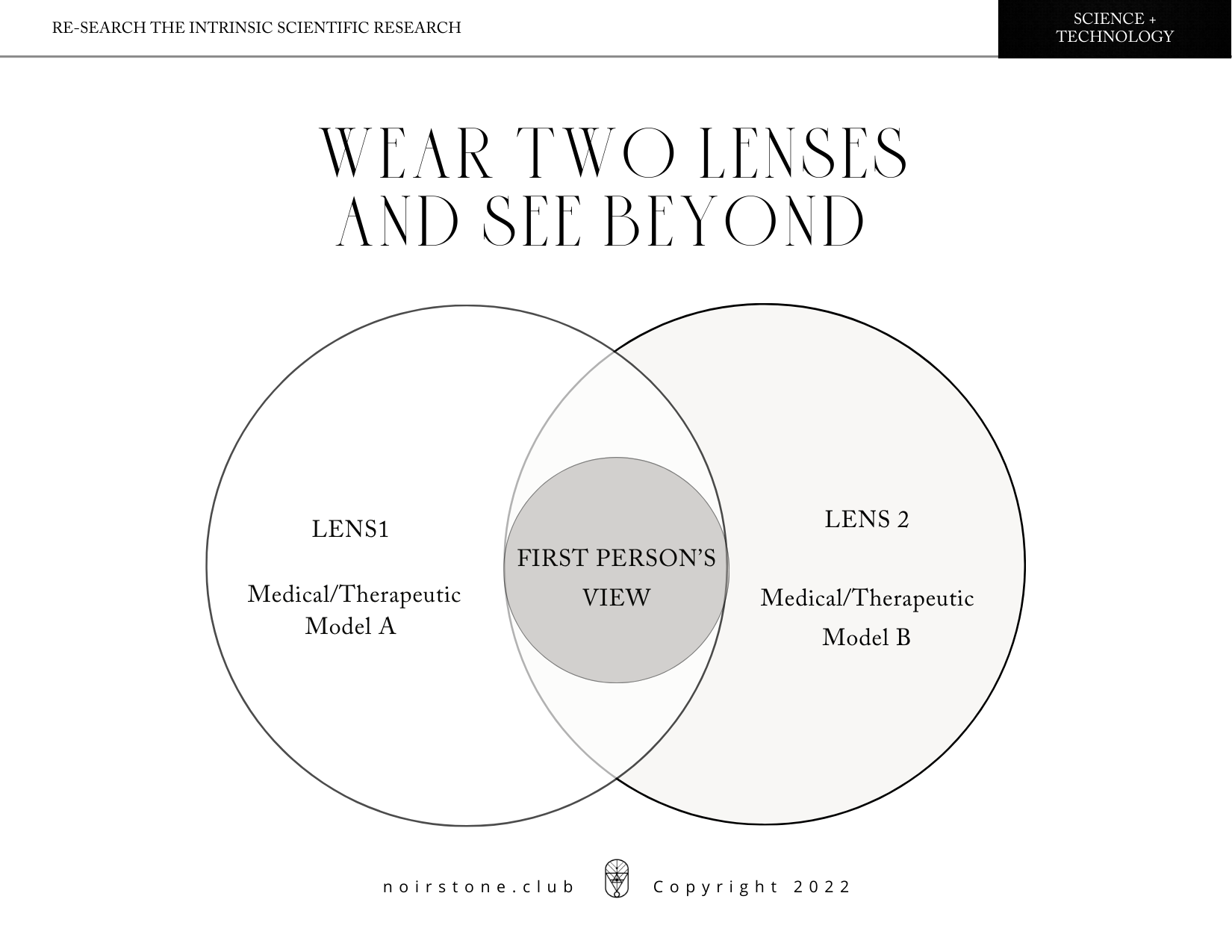
Now, we see these two lenses aren’t in direct conflict with each other, but are both equally important. Most research and studies can either be narrow-focused down to specific aspects, overlooking the big picture, or exploring the same element(s) with different methodologies, intent, perspectives. Much like different brands cultivate and serve their own customer base who share the similar values while occasionally finding a bridge leading to crossover collaborations. This fundamental understanding is here to help us understand that there isn’t just one answer in nature and is the foundational idea of societies.
現在我們看到這兩個角度並非彼此直接對立,而是同等重要。多數研究可能會狹義地聚焦於特定面向而忽略整體,或以不同的方法、意圖與觀點去探討相同要素。就像不同品牌培養並服務於各自的顧客群,這些顧客共享類似價值觀,而偶爾會有橋樑促成跨界合作。這項基本理解提醒我們:自然中沒有單一答案,這也是社會共同運作的基礎理念。
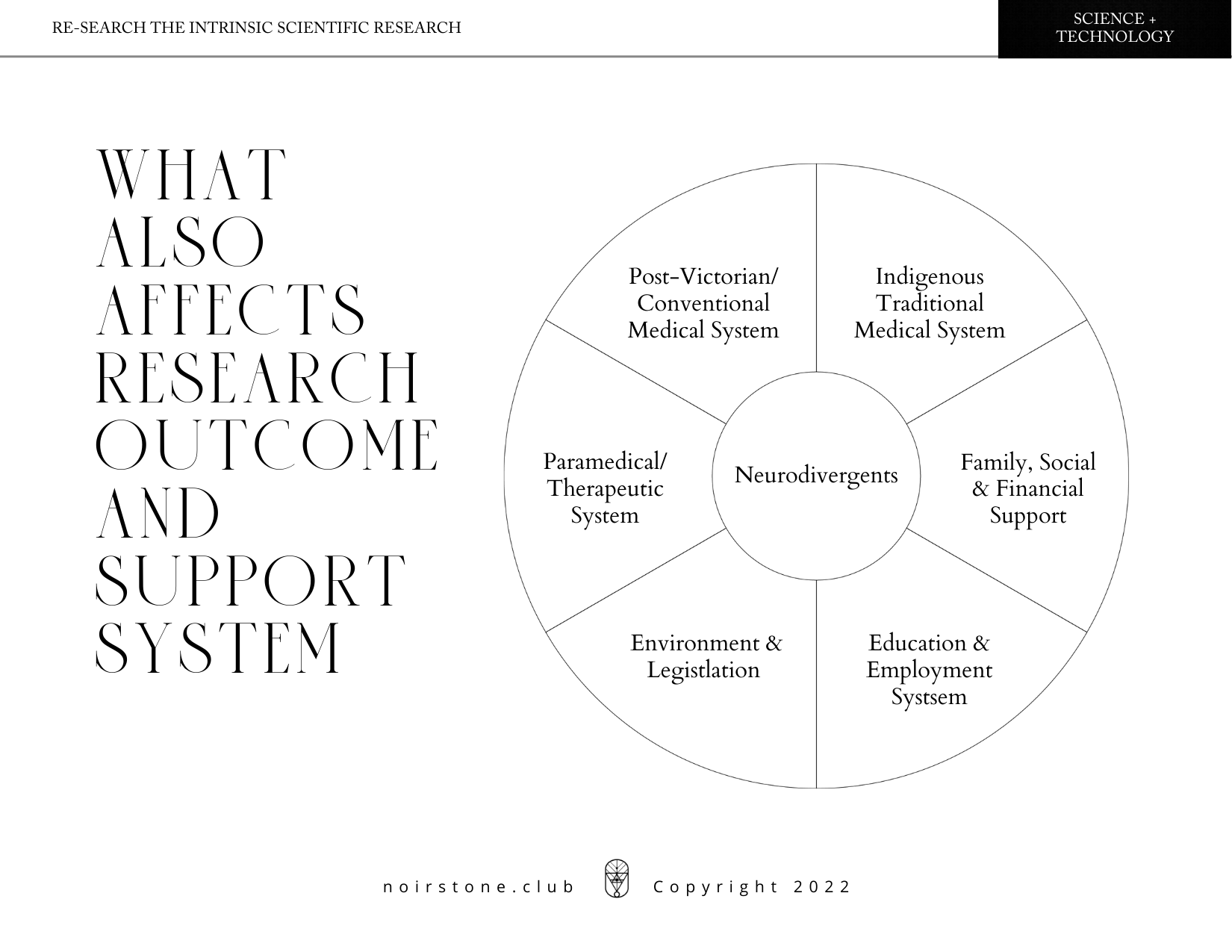
Staying up-to-date on the available research is an essential way of producing a safe form of healthcare instead of sick care. Medical doctors, nurses, Indigenous/traditional medicine practitioners, herbalists, therapists, research specialists, chemists, scientists, and self-advocates are part of the broad community of health care providers and educators with each having a role to play while also having an obligation to the conversation. In order to properly communicate with all members of this community, it’s crucial to respect each others’ views while aspiring to engage in dialog with a focus on understanding . Scientific research publication is one of the many ways to help professionals to communicate across the board.
掌握最新可用研究,是提供安全醫療(而非僅僅治療疾病)的關鍵途徑。醫師、護士、原住民/傳統醫療從業者、草藥師、治療師、研究專家、化學家、科學家與自我倡導者,皆屬於廣泛的醫療與教育社群,每個角色既各有職責,也對對話負有義務。為了與社群中所有成員適切溝通,尊重彼此觀點並以理解為目標進行對話至為重要。科學研究發表是幫助專業人士跨領域溝通的多種方式之一。
It goes without saying that research is not flawless. There often is room for error in scientific inquiry of all fields. However, in general, varying entities often take scientific studies as fact in order to prove or disprove ideas/concepts/etc. with the intent of personal gain. This has the unfortunate effect of adding unnecessary complexity to an already disorienting topic. (As we continue exploring the concept in the following paragraphs, we’ll discuss more on the in-depth potential of scientific research flaws in Part 2 section 8)
毋庸置疑,研究並非完美無缺。各領域的科學探究常存在誤差空間。然而,通常各種機構會將科學研究視為事實,以證明或反駁某些想法/概念等,往往帶有個人利益的意圖。這不幸地使原本已令人困惑的議題變得不必要地複雜。(在接下來的段落中,我們會在第二部分第 8 節深入討論科學研究缺陷的潛在問題。)
In a lot of situations, neurodivergents have unique relationships with our identities and views on our experiences just like indigenous/traditional medicine practitioners have the intimate relationship and in-depth understanding of herbal medicine that other medical systems might not have. Most research performed today is mostly done by teams of scientists, however, due to how the previous study model was set up, most scientists and researchers might not report adverse events due to lack of awareness of negative impacts on research participants. Furthermore, feedback and self reports from paramedical, caregivers, and first persons’ aren’t often included; Or the research details are done in a way that neurodivergents perceive as tedious and repetitive tasks in order to opt-out prior to the research process completion.
在許多情況下,神經多元人士對自我認同與經驗的看法具有獨特性,正如原住民/傳統醫藥從業者對草藥擁有其他醫療系統可能不具備的親密關係與深入理解。當今多數研究由科學家團隊執行,但由於以往研究模式的設計,很多科學家與研究者可能不會通報不良事件,因為對研究參與者所遭受的負面影響缺乏覺察。此外,來自輔助醫療人員、照顧者與第一人稱(當事人)的回饋與自我報告往往未被納入;或研究細節以神經多元人士感到枯燥繁複的方式設計,導致他們在研究完成前選擇退出。
Another reason might also be related to in the US alone, systemic racism affects the medical and educational accessibilities in different ethnic groups. While in Asia, along with racism and caste systems, neurodiversity is seen as mental illness instead of neurological differences. Even though some research has been done in South Korea, China, India, Iran, and Qatar in recent years respectively, the data isn’t as consistent due to cultural barriers or educated neurodiverse families finding ways to work within the limitations of the respective systems in order to get much needed near-equivalent medical and therapeutic care.
另一原因則與美國境內的制度性種族主義影響不同族群的醫療與教育可及性有關;而在亞洲,除了種族歧視與種姓制度外,神經多元性有時被視為精神疾病而非神經構造差異。即使近年在南韓、中國、印度、伊朗與卡塔爾等地各有研究,但因文化障礙或受過教育的神經多元家庭在各自體系限制下尋求近等效的醫療與治療照護,導致資料並不一致。
An example of herbal medicine such as Angelica is widely used in both Western herbal medicine and Traditional Chinese Medicines. The version being used in Western herbal medicine is an European species called Angelica archangelica and North American species called A. atropurpurea, whereas the one that is being used in Classical Chinese Medicine are A. sinensis, A. pubescen, and A. dahurica.
舉例來說,當歸(Angelica)在西方草本醫學與傳統中醫中皆被廣泛使用。西方草本常用的種類為歐洲種 Angelica archangelica,及北美種 A. atropurpurea,而中醫經典所使用的則為 A. sinensis、A. pubescens 與 A. dahurica 等中國種。
The European and North American Angelica specieses are used to help support digestive, circulation, and anxiety, while the Chinese variants are used to help support female hormonal and reproductive status on specific weeks in a monthly cycle.
歐洲與北美的當歸常用於支持消化、循環與緩解焦慮;而中國品種則多用於支持女性荷爾蒙與生殖狀態,特定於月經週期中的某些週期。
Because there are nuances as factors to affect the research outcome, we need to be able to review outputs with a critical mind, apply microscopic and macroscopic prospects, bringing our knowledge and capabilities to the table, while ensuring we identify the strengths and weaknesses in the research in order to provide constructive and respectful feedback to contribute to the conversation rather than detract.
因為有如此多微妙差異會影響研究結果,我們需要以批判性思維審視研究輸出,同時運用微觀與宏觀的視野角度,將我們的知識與能力帶入討論,並確保辨識研究的優弱點,以便提出建設性、尊重性的回饋,為作出貢獻而非削弱對話。
In Part two and three, we’ll walk you through the details on how to evaluate research to extend knowledge from actual use, whether personal or in a clinical setting as a practitioner, educator, and advocate .
在第二與第三部分,我們會帶你逐步了解如何評估研究細節,以便將知識延伸到不論是個人使用,或作為臨床從業者、教育者與倡議者的實際應用情境中。
Photos : Noirstone | Unsplash Kier in Sight Archives
This article was originally published on our website in 2022
Disclaimer: This publishing is made for informational and educational purposes only. It is not intended to be medical and life advice, nor an exhaustive list of specific treatment protocols. The approach and perspective is only based upon the content contributor’s knowledge, research, or clinical experience. The content creators, authors, editors, reviewers, contributors, and publishers cannot be held responsible for the accuracy or continued accuracy of the information or for any consequences in the form of liability, loss, injury, or damage incurred as a result of the use and application of any of the information, either directly or indirectly. Each plan must be individually tailored with the guidance and clinical judgment of your medical or healthcare practitioner or related advisor.
免責聲明:內容僅供資訊及教育用途,並非醫療或專業建議,亦非特定治療方案。本文所提供的方法與觀點,僅基於內容撰稿者的知識、研究或臨床經驗。內容創作者、作者、編輯、審閱者、貢獻者及出版方,對於資訊的準確性或持續準確性,或因使用及應用該等資訊而直接或間接導致的任何責任、損失、傷害或損害,概不承擔任何後果責任。每一項療法或計劃必須在您的醫療或健康護理、或相關專業人員的指導及臨床判斷下,作個別化的調整而定。