.png)




Traditionally, Qingming traces back over two millennia, rooted in the story of Jie Zitui — a loyal retainer who chose integrity over recognition, and whose remembrance became a ritual of honoring the dead with clarity and sincerity. Over time, it evolved into a day where families return to the land, not only to tend to graves, but to reconnect with continuity itself.
清明節通常被譯為掃墓節,其歷史可追溯至兩千多年前,源於介子推的故事。他是一位選擇堅守氣節而非追求功名的忠臣,人們以清明與誠敬的方式紀念他,逐漸形成祭祀先人的儀式。隨著時間推移,這一天演變為家族回到土地的日子,不只是修整祖墳,更是重新連結那份延續不息的脈絡。
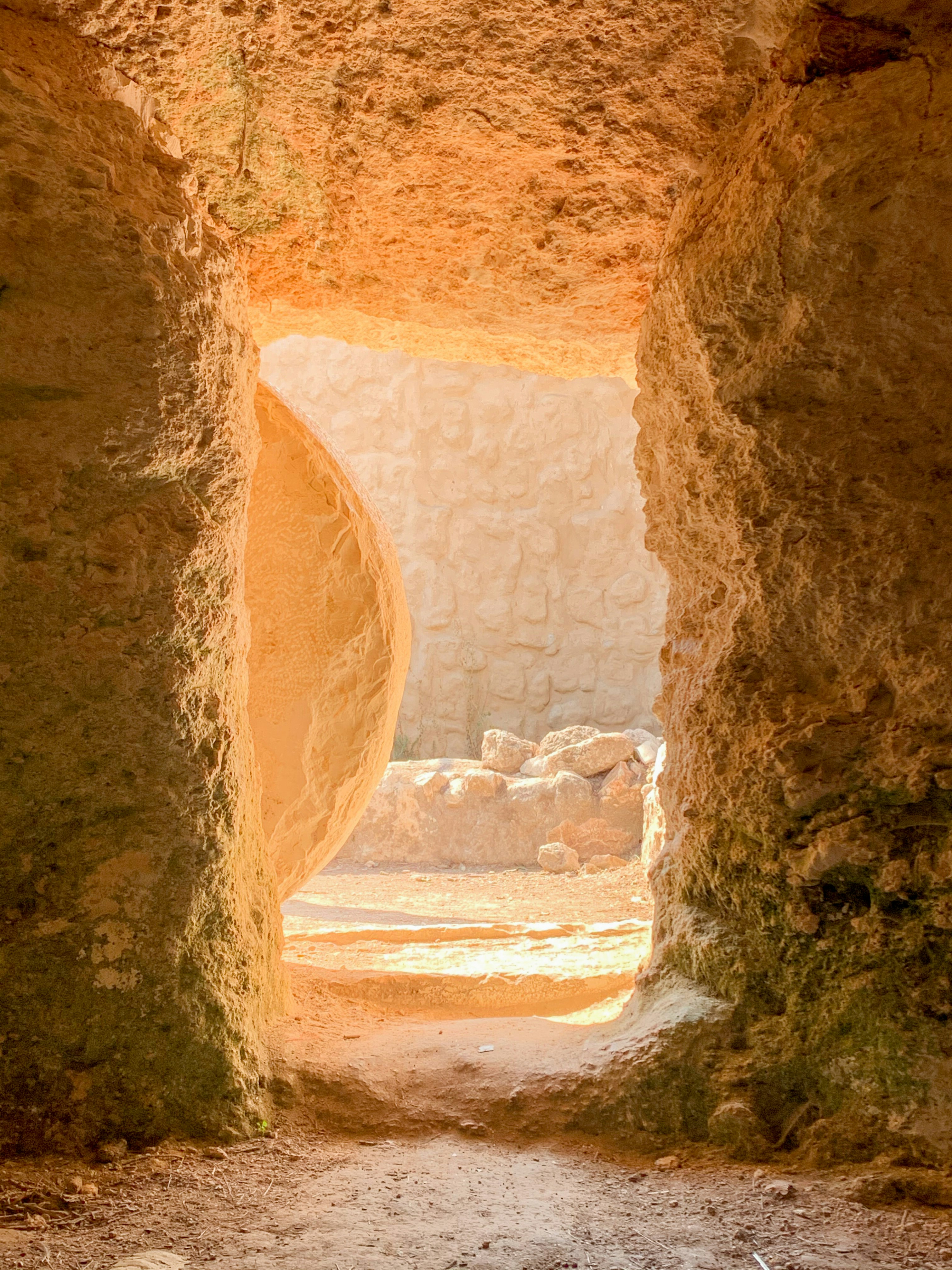
While one part of the world turns its attention toward the resurrection of Jesus, another turns inward—toward ancestry, memory, and the unseen threads that hold generations together.
當世界的一部分將目光投向耶穌的復活,另一部分則向內凝視——朝向祖先、記憶,以及那些維繫世代之間的無形連結。
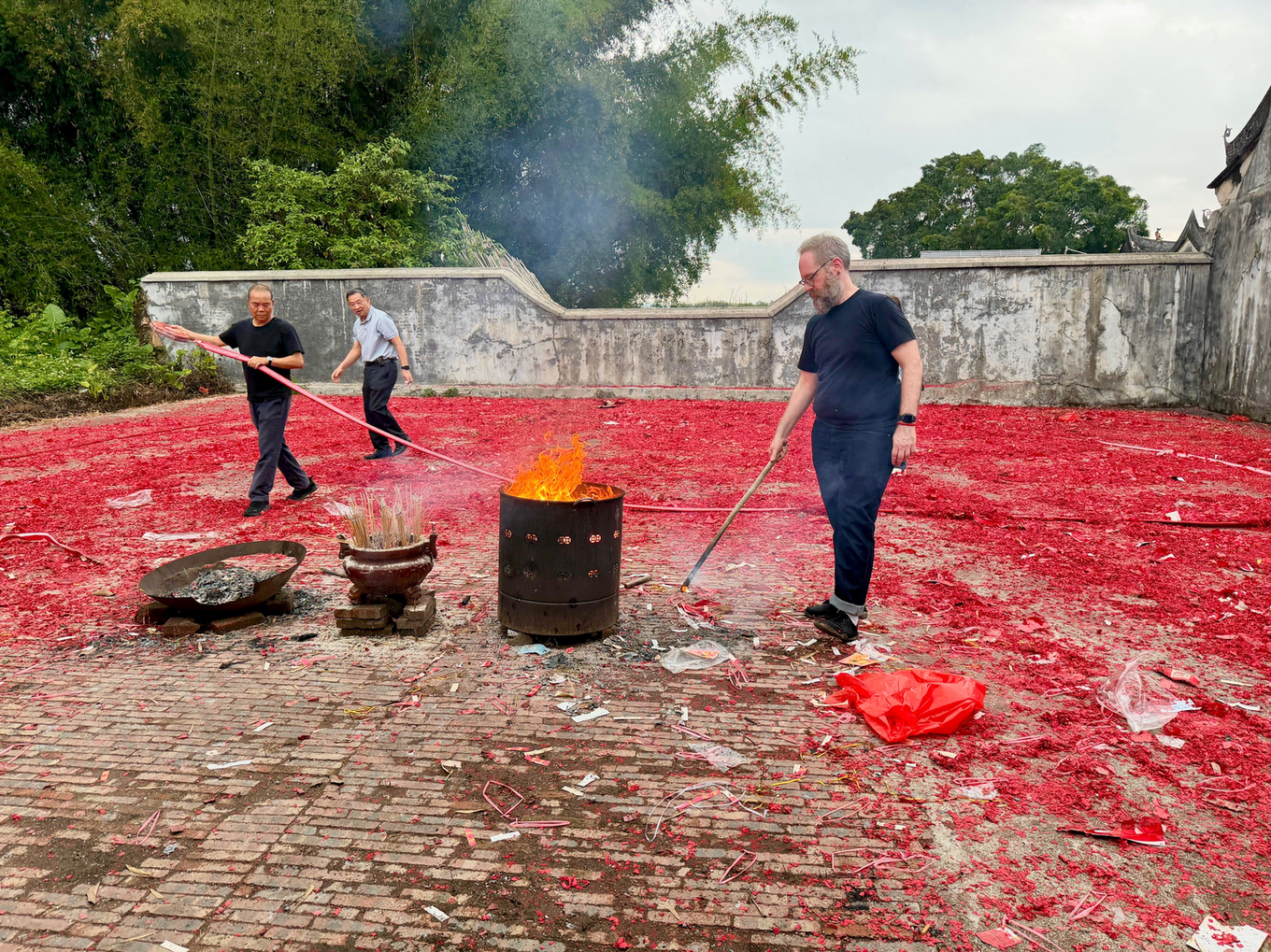
This year, we joined our Lui clan in these rituals. It was the first time my husband, Elliott and our children experienced such a gathering.
今年,我們與呂姓家族一同參與這些儀式。這是我丈夫Elliott 和孩子們第一次經歷這樣的聚會。
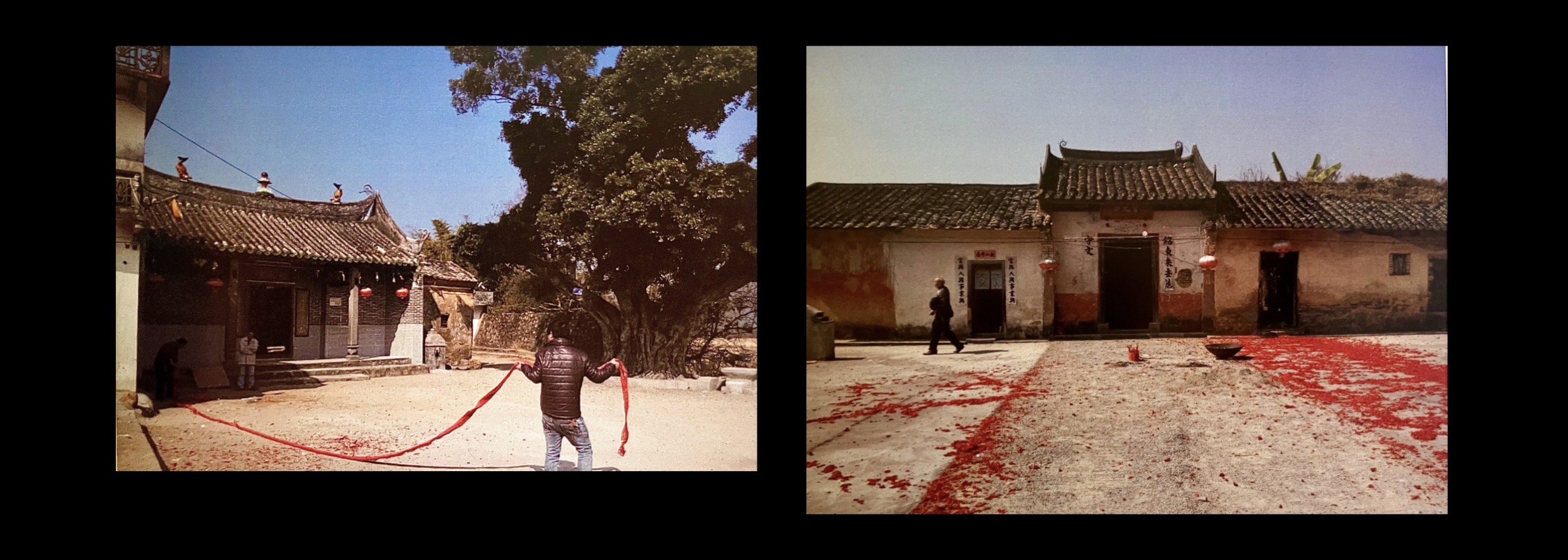
Before we began, I offered them only one instruction:
在開始之前,我只給了他們一個提醒:
Observe
觀察
There may be moments of uncertainty. Things may not be explained. Emotions may arise without context. But the first appropriate step is always to observe.
當中或許會有突發時刻,有些事情未必會有解釋,情緒也可能不穩定地浮現。但第一個恰當的步驟,始終是觀察。
Descendants gathered in numbers that quietly spoke of lineage—moving from one grave to another, from private family shrines to communal altars. Depending on the unity and rhythm of a clan, these gatherings can range from fifty to several hundred people within a single village.
家族聚集的人數,靜靜訴說著血脈的延續——從一座墳墓走到另一座,從私人的家族祠堂到共同的祭壇。依據宗族的凝聚力與節奏,在同一個村落中,參與人數可由五十人至數百人不等。
And yet, within this movement, something becomes very clear. Titles dissolve. Roles soften.
然而,在這樣情況下,頭銜消融,角色變得平平無奇。
Regardless of one’s position in family or society, when standing before the shrine, all kneel the same way—grounded, humbled—bowing to give thanks to ancestors, deities, and the greater order of the universe that continues to hold us.
無論在家族或社會中的位置如何,當站在祠前,所有人都以同樣的方式跪下——腳踏實地,心存謙卑——向祖先、神明,以及天地秩序致謝。
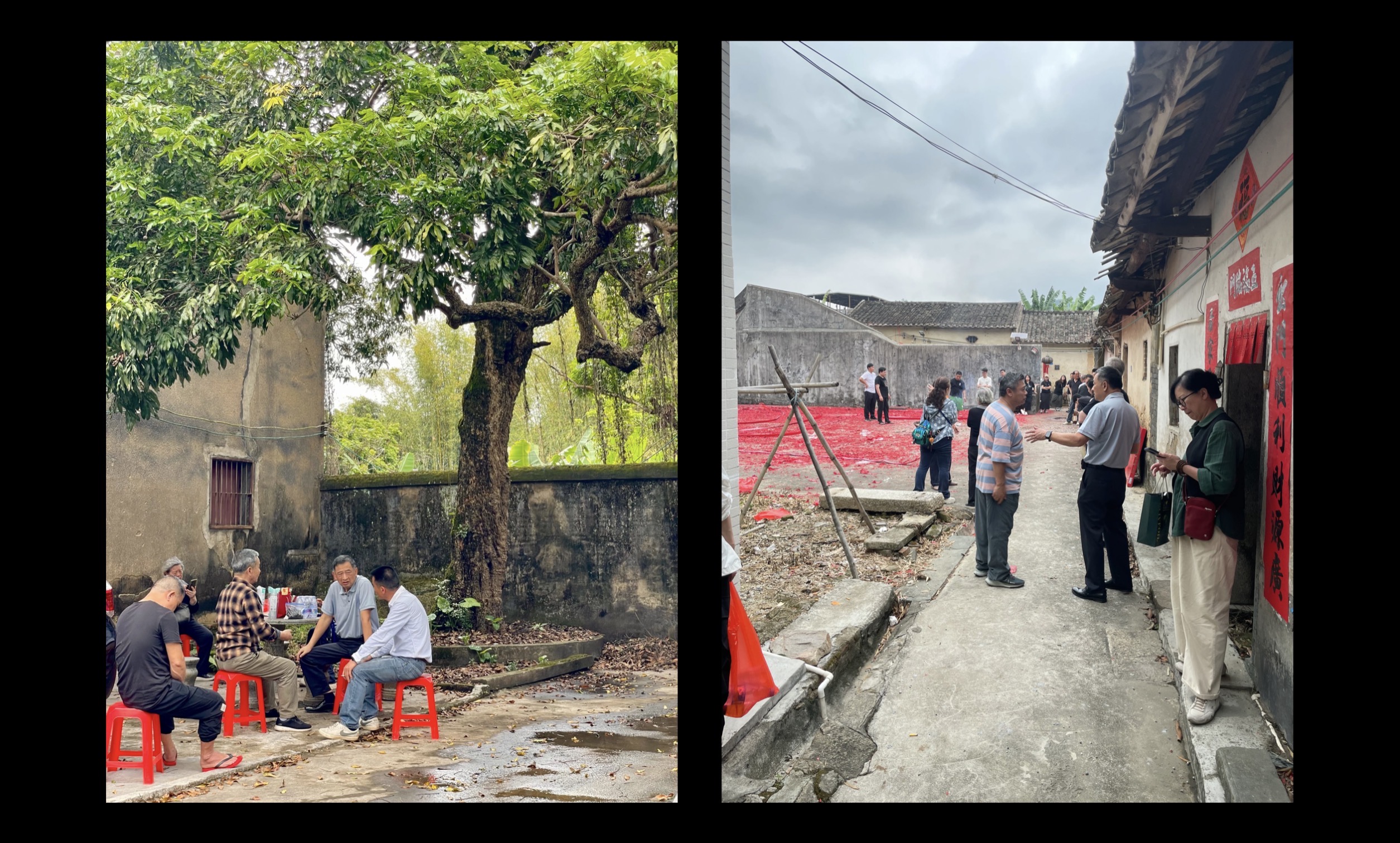
Later, we gathered for a shared meal. Conversations flowed between the future of the village and the preservation of cultural heritage, questions that carry both weight and responsibility. At the same time, my father, who was hosting the gathering, received a call from his factory. A worker had suddenly passed during the holiday.
之後,大家一同用餐。談話在村落的未來與文化傳承責任。與此同時,負責籌辦聚會的父親接到工廠來電關於一位工人在假日期間突然離世。
And so, within a single afternoon, the children witnessed something no textbook could teach:
於是,在短短一個下午之內,孩子們見證了一件任何課本都無法教授的事情:
how life does not separate ceremony from responsibility.
生命從不將儀式與責任分開。
Hospitality continued. Decisions were made. Priorities shifted.
好客款待仍在繼續,決策同時進行,處理事情的優先次序悄然轉變。
Rituals did not stop but neither did life.
儀式沒有停止,生活亦然繼續。
Firecrackers echoed across the village as each household marked their offerings. And woven into that sound, almost indistinguishable, was another truth quietly present: that this Easter, and this Qingming, were not only days of remembrance, but days where life and death stood side by side, without separation.
當各家各戶進行祭祀時,鞭炮聲在村落中此起彼落。而在那聲響之中,幾乎難以分辨地,還交織著另一種靜默的真實:這個復活節與清明,不只是紀念的日子,也是生命與死亡並肩而立、毫不分離的日子。
After a long day, and a high-speed train ride back to Hong Kong, our daughter asked Elliott whether he felt “very Chinese” by now.
在漫長的一天結束後,乘坐高鐵返回香港的途中,我們的女兒問Elliott,他是否已經覺得自己「很中國人」。
He paused, then answered simply that he would never be Chinese, no matter how long he stayed. But he felt welcomed as an honoured guest with space to continue learning.
他停頓了一下,然後簡單地回答:無論停留多久,他都不會成為中國人。但他以一位受尊重的客人身份,感到被接納並擁有繼續學習的空間。
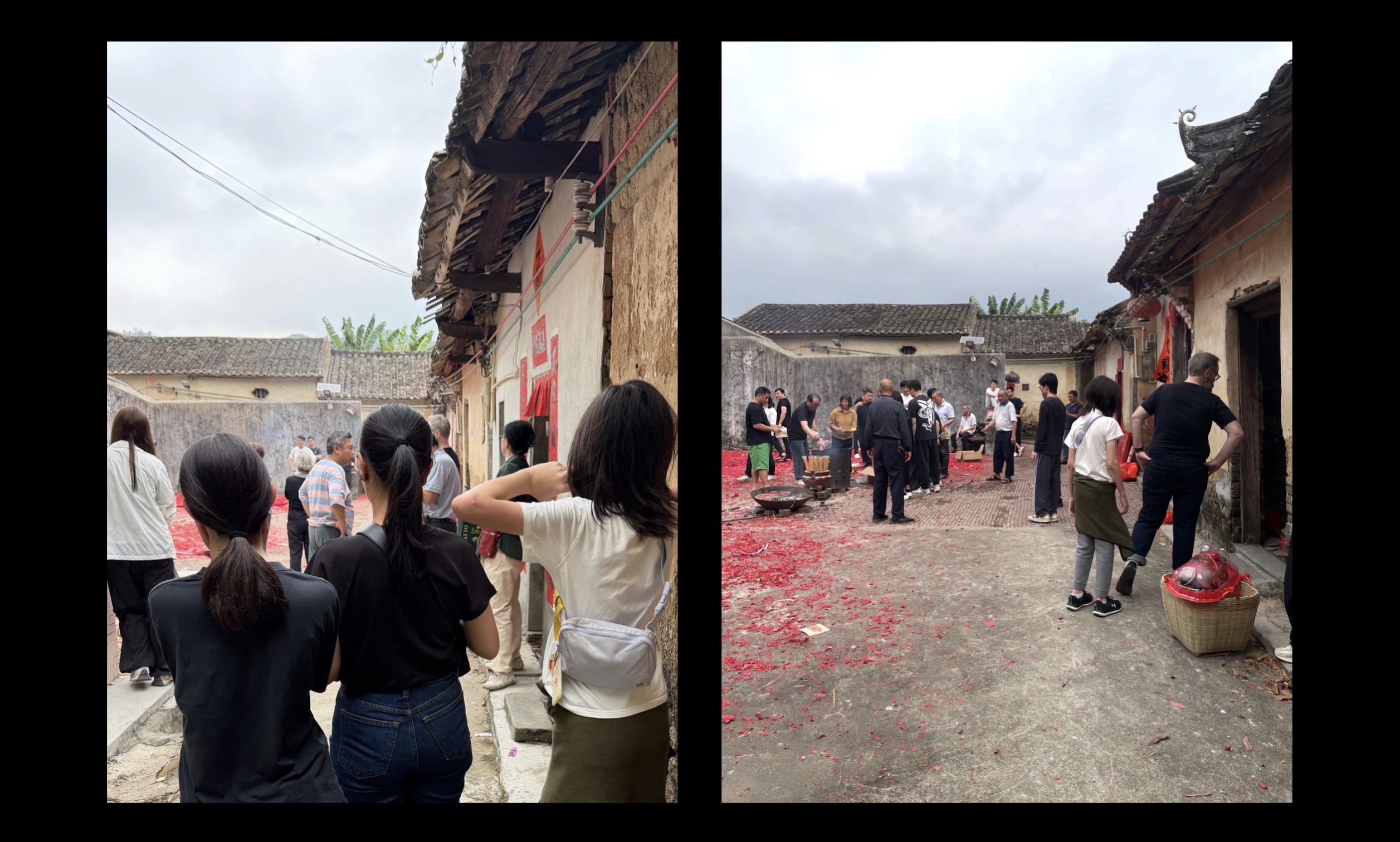
“Culture is observational.
You cannot install a culture of experimentation. You can only model it.Culture isn’t what’s written in the employee handbook or posted on the lobby wall. Culture is what people observe. Geology works this way too. Ninety-nine percent of the change to a landscape happens in one percent of the time — earthquakes, floods, eruptions. The slow steady stuff barely moves anything. Culture is identical. Most of what you do day-to-day barely registers. But a handful of moments — specific, visible, impossible to misread — reshape the terrain completely.”
「文化是透過觀察而形成的。你無法強行植入一種實驗文化,你只能以身作則。文化並不是寫在員工手冊裡,或貼在大堂牆上的東西。文化,是人們所觀察到的。地質變化亦是如此。地貌百分之九十九的改變,發生在百分之一的時間之中——地震、洪水、火山爆發。那些緩慢而持續的變化,幾乎不帶來顯著改變。文化也是一樣。你日常所做的大部分事情,幾乎不會留下痕跡。但少數幾個時刻——具體、可見、無法誤解——卻會徹底重塑整個格局。」—— Marc Randolph
Chinese culture is often misunderstood as something visible—language, clothing, qigong performed under a tree, or a nation obsessed with Lao Gan Ma. But these are only the outer expressions.
中國文化常被誤解為一種可見的形式——語言、服飾、在樹下做氣功、或全國愛吃老乾媽。
但這些,都只是外在形象。
Beneath them lies something far more intricate:
a way of perceiving relationships, of navigating hierarchy without rigidity, of communicating through layers rather than declarations. It is a living system—formed over millennia, continuously adapting, yet anchored in something deeply human.
在其之下,蘊藏著更為細膩複雜的本質:一種理解關係的方式,一種在不僵化之中處理層級的能力,一種透過層次而非直接宣告來溝通的語言。這是一個歷經千年形成,不斷演化,同時扎根於深層人性之中的系統。
It cannot be learned through imitation alone;It must first be observed.
它無法單靠模仿而學會;它必須先被觀察。
Then, slowly, it may be understood.
然後,慢慢地,才可能被理解。
And only then, perhaps, lived.
也唯有如此,才能真正被活出來。
In many ways, this is true across all traditions. We may read the Bible, yet we do not become Jesus. We may shave our heads, yet we do not become the Buddha. We may recite sutras or speak of compassion, yet without stepping into the world, compassion has no place to land. Words, without observation, remain hollow.
在許多層面上,這對所有傳統皆然。我們可以閱讀聖經,卻不會因此成為耶穌。我們可以剃度,卻不會因此成為佛陀。我們可以誦經或談論慈悲,但若不真正走入世間——沒有入世——慈悲便無處安放。言語若沒有觀察,終究是空的。
But when we begin to observe—truly observe—something shifts. Not in what we know, but in how we come to know. And perhaps that is where culture (or life) begins. Not in what we claim, but in what we are willing to witness. Especially in moments where life and death quietly meet, and ask us to stay present to both.
但當我們開始觀察,真正地觀察,某些東西會開始轉變。改變的,不是我們知道什麼,而是我們如何去知道。或許,文化、甚至整人生正是從這裡開始。不在於我們如何宣稱,而在於我們願意見證什麼,尤其是在生命與死亡悄然相遇的時刻,邀請我們觀察及面對它們。
Photos : Nicole Lui | Unsplash EJ Li| Unsplash Pisit Heng
Disclaimer: This publishing is made for informational and educational purposes only. It is not intended to be medical and life advice, nor an exhaustive list of specific treatment protocols. The approach and perspective is only based upon the content contributor’s knowledge, research, or clinical experience. The content creators, authors, editors, reviewers, contributors, and publishers cannot be held responsible for the accuracy or continued accuracy of the information or for any consequences in the form of liability, loss, injury, or damage incurred as a result of the use and application of any of the information, either directly or indirectly. Each plan must be individually tailored with the guidance and clinical judgment of your medical or healthcare practitioner or related advisor.
免責聲明:內容僅供資訊及教育用途,並非醫療或專業建議,亦非特定治療方案。本文所提供的方法與觀點,僅基於內容撰稿者的知識、研究或臨床經驗。內容創作者、作者、編輯、審閱者、貢獻者及出版方,對於資訊的準確性或持續準確性,或因使用及應用該等資訊而直接或間接導致的任何責任、損失、傷害或損害,概不承擔任何後果責任。每一項療法或計劃必須在您的醫療或健康護理、或相關專業人員的指導及臨床判斷下,作個別化的調整而定。