.png)




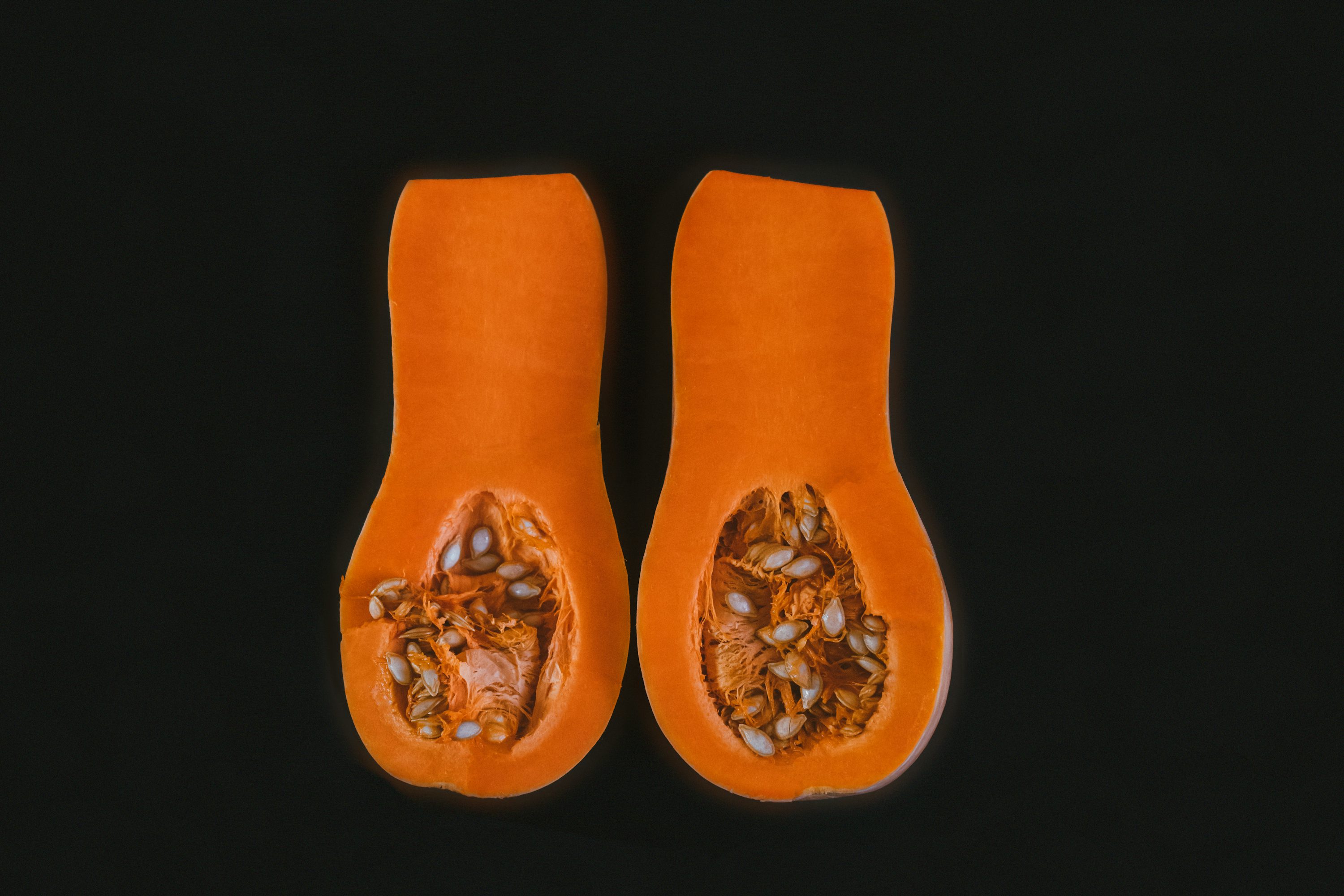

Seasonal food exists for a reason. Its vitamins, flavonoids, minerals, and natural enzymes are designed to nourish us exactly when we need them most. In this season, they help reinforce immunity, open detox pathways, harmonize meridian channels, and provide the fuel for our healing processes.
時令食材自有其道理。它所含的維他命、類黃酮、礦物質與天然酵素,正正是在我們最需要的時候提供滋養。在這個季節,它們有助強化免疫、打開排毒通道、調和經絡,並為身體的修復過程提供燃料。
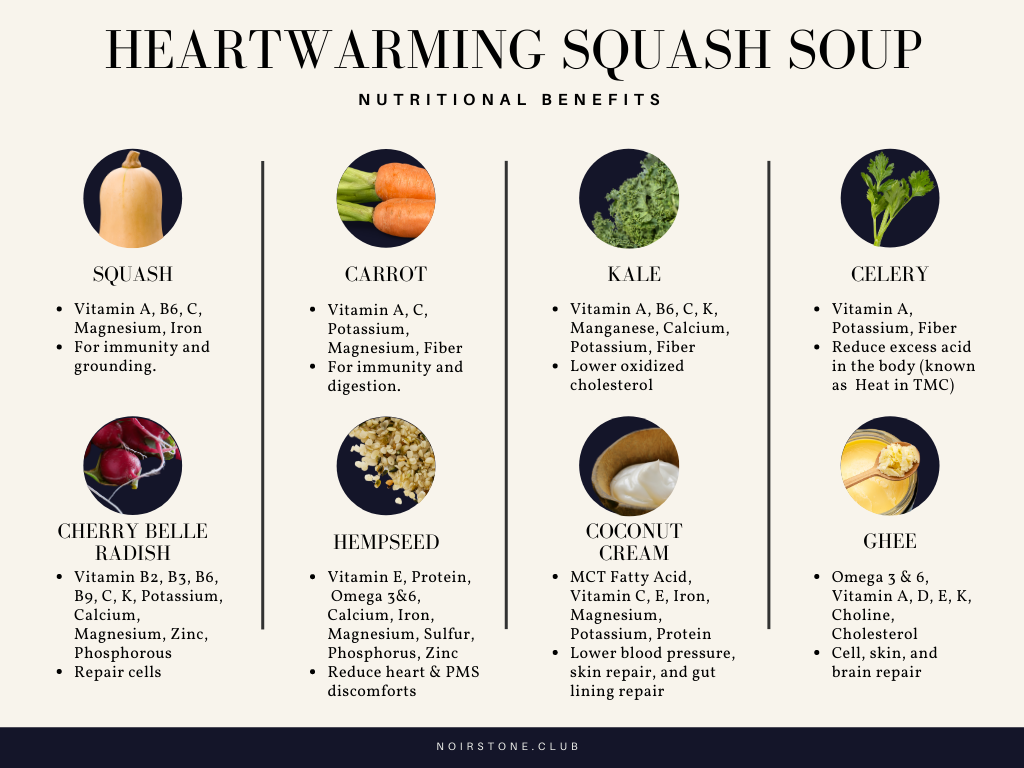
In Western nutrition, Vitamin A, C, D, zinc, glutathione, and essential fatty acids are emphasized for immunity, while choline and cholesterol support hormone balance and cellular function.
在西方營養學中,維他命 A、C、D、鋅、谷胱甘肽及必需脂肪酸被視為免疫的關鍵;而膽鹼和膽固醇則提供荷爾蒙平衡與細胞功能。
In Traditional Chinese Medicine (TCM), late autumn and winter correspond to the Water element and the Kidney–Bladder meridians. The cold and damp can strain digestion, joints, and cognitive clarity. Supporting the Kidneys and Spleen through warming, hearty foods builds resilience against seasonal sickness and emotional heaviness.
在中醫理論中,深秋與冬天屬於「水」元素,對應腎與膀胱經。寒濕容易損傷消化、關節與思維清晰度。透過溫性的食物來補益腎脾,有助增強對季節性疾病及沉重情緒的抵抗力。
In Ayurveda, winter aggravates vāta and kapha, manifesting as indigestion, joint stiffness, loneliness, or seasonal depression. A warm, spiced soup helps to rebalance appetite, comfort the mind, and ease digestion across traditions.
在阿育吠陀醫學中,冬季會加重 vāta 與 kapha,表現為消化不良、關節僵硬、孤獨或季節性抑鬱。溫性的香料湯能幫助重整食慾、安撫心神並促進消化。
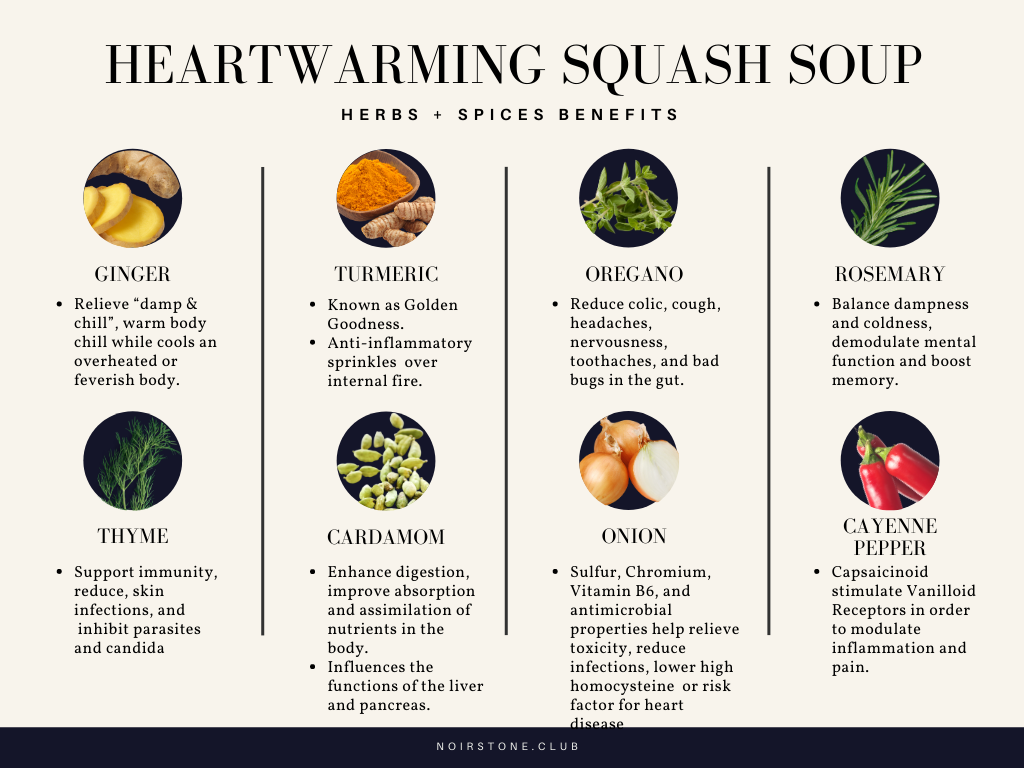
The Three Brains — head, heart, and gut are all affected by seasonal change. Dull skin, slower cognition, indigestion, and low mood can all be signs of cold-damp stagnation in the body. Soup offers warmth, moisture, and digestibility. Spices, seeds, and roots also bring protective compounds: anti-inflammatory, antimicrobial, antiviral, and even adaptogenic properties that guard against seasonal stress.
「三腦」之稱的頭腦、心腦與腸腦都會受到季節變化影響。皮膚暗啞、思維遲緩、消化不良、情緒低落,皆可能是體內寒濕鬱滯的表現。湯水能提供溫暖、滋潤與易消化的特性;香料、種子與根類更蘊含保護成分,具抗炎、抗菌、抗病毒甚至適應原效用,幫助抵禦季節性壓力。
Instructions
做法
(If using a pressure cooker or stovetop pot, adjust cooking time accordingly.)
(如用壓力鍋或明火鍋,請相應調整時間。)
Ginger is more than spice, it is transformation itself. In its raw form, it carries gingerol, abundant and supportive for digestion, circulation, and gentle warmth. Yet when ginger is steamed, roasted, or dried beneath the sun, gingerol transforms into shogaol, a compound over ten times stronger in medicinal effect.
薑不僅是香料,它本身就是轉化物。生薑含有薑辣素,能助消化、促循環並帶來溫和暖意。而當薑經蒸、烤或日曬後,薑辣素便會轉化為薑烯酚,其藥效比前者強逾十倍。
Fresh ginger comforts; dried ginger empowers. One soothes the sensitive gut, the other drives out cold and damp with fiery precision. Choosing between them allows you to fine-tune this soup to your constitution.
生薑予人安慰;乾薑賦人力量。前者舒緩敏感腸胃,後者精準驅寒祛濕。選擇哪一種,正好讓這碗湯更貼合你的體質。
Fresh vs. dried ginger: Fresh is gentler for sensitive digestion; dried is hotter and stronger for dispersing cold.
生薑 vs. 乾薑:生薑較溫和,適合腸胃敏感;乾薑較烈,驅寒效果更強。
Radish and certain herbs are high in phenols and may stress sulfation pathways (PST). Avoid or Consume in moderation if sensitive.
蘿蔔及部分香草含有較高酚類,或增加硫酸化途徑(PST)負擔。若屬敏感體質,宜適量或避免食用。
Black pepper stimulates digestive enzymes and immunity but is high in oxalates; avoid if oxalate-sensitive.
黑胡椒可刺激消化酵素並提升免疫,但草酸含量高;如對草酸敏感人士宜避免。
Excess Heat / Yin Deficiency with Fire symptoms: night sweats, red tongue, hot palms/soles. The warming spices may aggravate dryness and heat.
陰虛火旺症狀:盜汗、舌紅、手心腳心發熱。溫熱香料或會加劇燥熱。
Damp-Phlegm Constitution symptoms: heaviness, bloating, thick greasy tongue coating, sluggish digestion. The richness of coconut cream and hemp may worsen dampness.
痰濕體質症狀:沉重、腹脹、舌苔厚膩、消化遲緩。椰漿與火麻仁的厚膩可能加重濕困。
Weak Spleen Qi with Loose Stools symptoms: poor appetite, bloating, diarrhea, fatigue. The heaviness of coconut and roughness of kale may be too taxing.
脾虛泄瀉症狀:納呆、腹脹、腹瀉、乏力。椰漿之厚膩及羽衣甘藍之粗糙或過於勞脾。
Cold-damp, Qi-deficient, or Yang-deficient constitutions such as fatigue, cold hands and feet, seasonal depression, joint stiffness. The warmth of ginger, turmeric, and ghee helps restore balance.
寒濕、氣虛或陽虛體質症狀:疲倦、手腳冰冷、季節性抑鬱、關節僵硬。薑、薑黃與酥油的溫性有助恢復平衡。
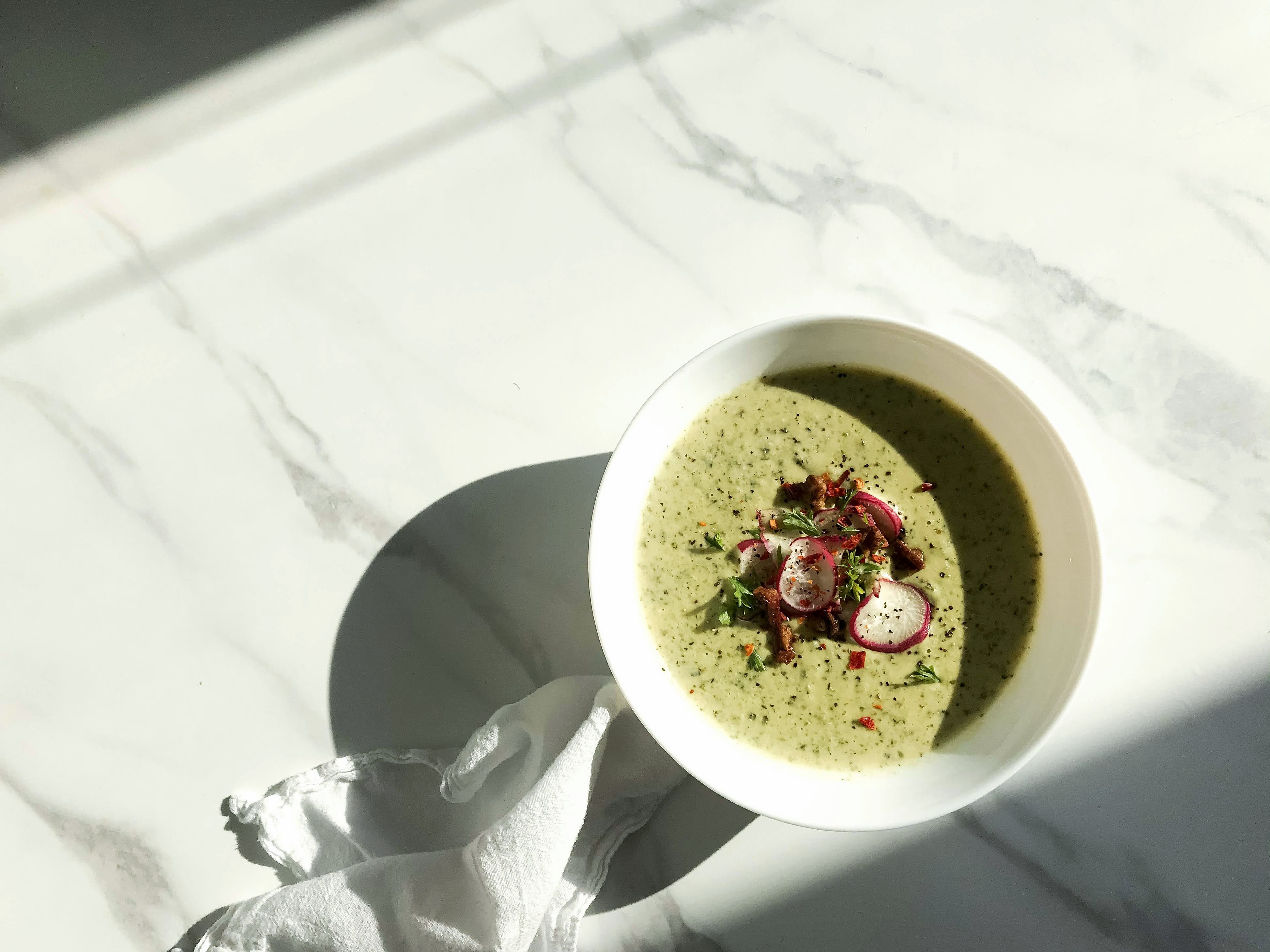
This soup is nutritionally dense, energetically warming, and seasonally aligned. It brings together the wisdom of Western nutrition, TCM, and Ayurveda to support immunity, digestion, and mood in the colder months. Adjust the herbs and spices to your constitution, and let the bowl serve as both comfort and medicine.
這碗湯營養豐富、能量溫暖,並順應時令。它融合西方營養學、中醫與阿育吠陀智慧,在寒冷季節支援免疫、消化與情緒。根據體質調整香草與香料,讓這碗湯既是安慰,也是良藥。
Bon Appétit x
Photos: Noirstone | Unsplash J M | Unsplash Kate Ibragimova |
Disclaimer: This publishing is made for informational and educational purposes only. It is not intended to be medical and life advice, nor an exhaustive list of specific treatment protocols. The approach and perspective is only based upon the content contributor’s knowledge, research, or clinical experience. The content creators, authors, editors, reviewers, contributors, and publishers cannot be held responsible for the accuracy or continued accuracy of the information or for any consequences in the form of liability, loss, injury, or damage incurred as a result of the use and application of any of the information, either directly or indirectly. Each plan must be individually tailored with the guidance and clinical judgment of your medical or healthcare practitioner or related advisor.
免責聲明:內容僅供資訊及教育用途,並非醫療或專業建議,亦非特定治療方案。本文所提供的方法與觀點,僅基於內容撰稿者的知識、研究或臨床經驗。內容創作者、作者、編輯、審閱者、貢獻者及出版方,對於資訊的準確性或持續準確性,或因使用及應用該等資訊而直接或間接導致的任何責任、損失、傷害或損害,概不承擔任何後果責任。每一項療法或計劃必須在您的醫療或健康護理、或相關專業人員的指導及臨床判斷下,作個別化的調整而定。